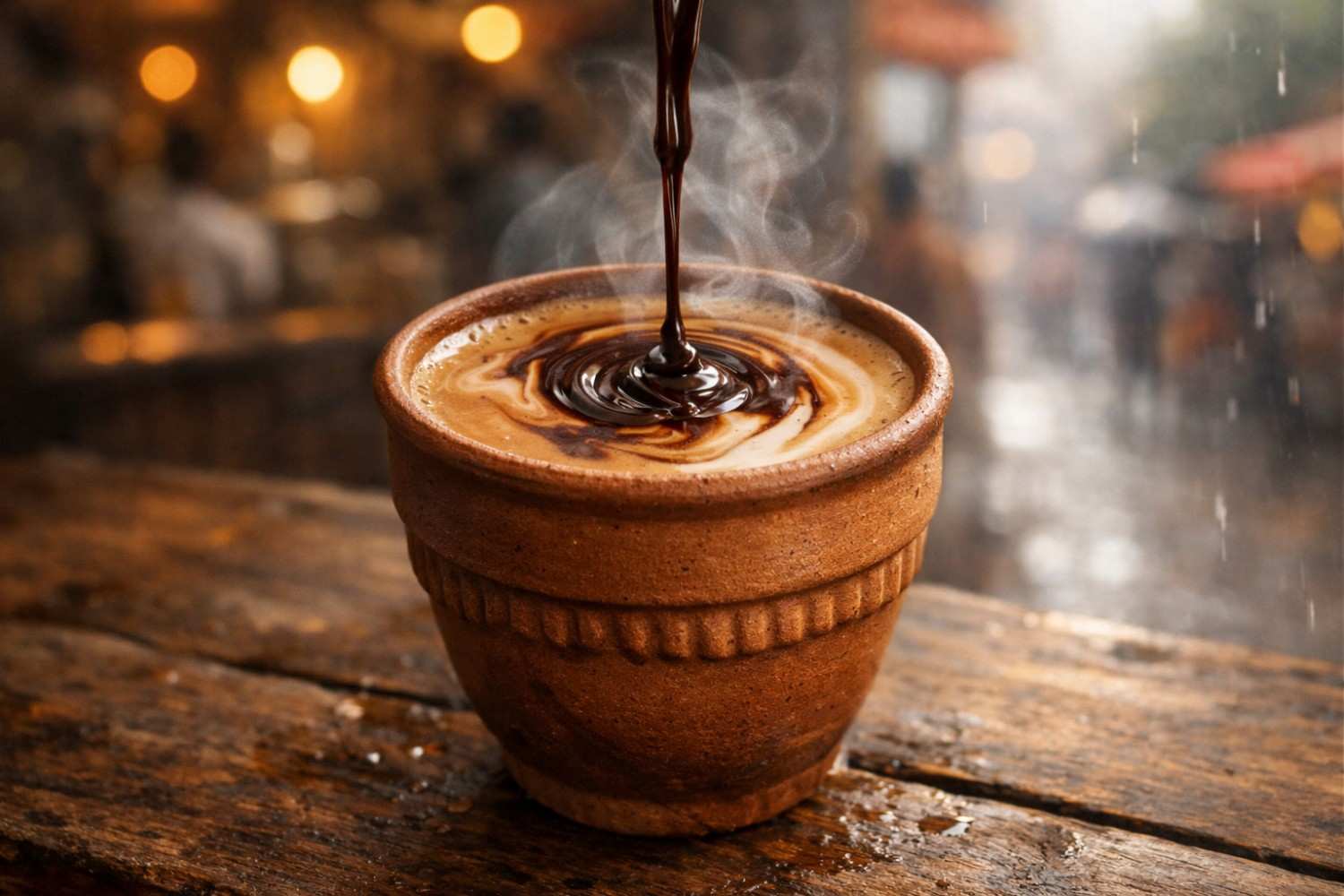
It was a regular Tuesday evening in Pune. Rain had been falling since afternoon, the kind that slows everything down and makes you crave something warm and comforting. A college student walked into our outlet, his jacket still dripping, fully expecting to order his usual cutting chai and head back home. But something on the board stopped him cold.
Two words. Chocolate Tea.
He paused. He ordered it. One sip later, he put the glass down slowly, looked at it with wide eyes, and reached straight for his phone. The reel he posted that night had just one caption:
"Bhai, chocolate in chai? What has Yewale done, yaar?"
That reel crossed 80,000 views in 48 hours. For three straight days, that outlet saw a 40% jump in walk-ins, all from people who had seen one video from a stranger on the internet.
That is not a marketing campaign. That is not a paid ad. That is the power of a product that people simply cannot help but talk about.
But here is the question nobody asks: why did it go viral? What made one cup of tea turn into a foot traffic engine? And more importantly, how do you build a product like that on purpose?
That is exactly what we are breaking down today.
| What Is Chocolate Tea? | Chocolate tea is a warm, Indian-style chai blended with real cocoa or chocolate flavoring, served with the same spiced milk base you already love. It combines the comfort of chai with the richness of chocolate in a single cup. |
Chocolate Tea Is Not an Accident. It Is a Strategy.
Most people look at a viral product and say, 'Oh, they got lucky.' What most people do not realize is that viral products at the best chai brands in India are engineered outcomes, not happy accidents. They are built on three things: a deep understanding of the customer, a solid product foundation, and a brand people already trust.
Chocolate Tea did not show up on our menu because someone thought it sounded fun. It showed up because we spent 40 years listening to what tea lovers actually want, and the signals from the market had become impossible to ignore.
The Indian Tea Market Was Sending Clear Signals
Here is something surprising: India is the world's second largest tea producer and one of its biggest consumers. Indians drink over 837,000 tonnes of tea every year. But the story that does not get told enough is this: younger Indians, especially those between 18 and 35, were getting restless.
Not restless with chai itself. Restless with the same chai, served the same way, every single day.
A 2024 market analysis of India's cafe and beverage sector found that 75% of Gen Z consumers drink tea regularly. But they were also the fastest-growing segment visiting coffee shops and bubble tea outlets, specifically because those places offered something different. Something worth talking about.
That was the signal. Indian tea lovers were not walking away from chai. They were looking for a chai that surprised them.
The 'Familiar Plus Unexpected' Formula That Works Every Time
This is the formula behind almost every viral food product you can think of. Chocolate Tea works because it pairs something deeply familiar (chai) with something unexpected (chocolate). Your brain processes it as: I know this, but wait, I do not quite recognize this.
Research in food psychology backs this up fully. Psychologist Charles Spence at Oxford found that foods which stimulate multiple senses at the same time are significantly more shareable than single-dimension foods. Chocolate Tea delivers warmth, rich aroma, a deep color contrast, and an unexpected flavor all in one cup.
That multi-sensory experience is exactly what makes someone pull out their phone before they even finish drinking.
What the Competition Is Doing (And Where the Real Gap Is)
To understand why Chocolate Tea stands out the way it does, it helps to look at what other brands in the tea franchise space are doing right now. Here is an honest comparison.
| Brand | Chocolate Tea? | Approach | Price Range |
| Chai Sutta Bar | Yes | Budget kulhad serving, part of 20+ flavors, low-margin volume model | Rs. 10 to Rs. 30 |
| MBA Chai Wala | Limited | Not a flagship product, narrow flavor menu cited as growth weakness | Rs. 30 to Rs. 80 |
| Chaayos | Partial | Premium cafe positioning, chocolate variants exist but are secondary | Rs. 120 to Rs. 200 |
| Chai Point | Rarely | Tech-first delivery model, masala chai is the core product | Rs. 80 to Rs. 150 |
| Yewale Amruttulya | Yes | 40-year brand trust, standardized recipe across 650+ outlets, clean ingredients | Rs. 30 to Rs. 80 |
Here is what that table tells you. Chai Sutta Bar was among the first to put chocolate chai on a mass menu. But at Rs. 10 to Rs. 30, the margins are thin and the product sits in commodity territory. MBA Chai Wala's limited flavor range has been noted in industry analysis as one key reason it has grown more slowly than competitors.
Chaayos and Chai Point each serve a specific niche: one is premium urban, the other is office delivery. Their chocolate chai, where it exists at all, is not a brand statement. It is just another line item.
The gap in the market is clear: a brand that combines mass accessibility, genuine heritage trust, and a truly great chocolate chai served consistently across hundreds of outlets. That is the space we occupy.
The Neuroscience of Why Chocolate Tea Drives Foot Traffic
Here is something most chai brand blogs never touch: what actually happens inside the brain when someone sees or tastes chocolate tea for the first time. This is where the real answer lives.
Your Brain on Chocolate (And Why It Creates Viral Moments)
Neuroscience research using fMRI brain scans has shown that chocolate activates the brain's reward center, the ventromedial prefrontal cortex, more strongly than almost any other food category. It triggers a release of dopamine, the chemical linked directly to pleasure and the desire to repeat an experience.
When you combine that response with chai, which itself carries deep emotional memories of home, monsoon mornings, and comfort, you create a double layer of positive feeling in the brain. That layered feeling is what people instinctively want to share with someone else.
This is not a theory. It is the same mechanism behind why the Dubai chocolate bar went viral globally. It is why Biscoff chai became a trending topic on Instagram before most chai brands even noticed. The formula is always the same: emotional familiarity plus sensory novelty equals content that spreads.
FOODMO Is Real, and It Is Working Quietly in Our Favor
Behavioral researchers who study food trends have described a phenomenon they call FOODMO, which stands for Fear Of Missing Out On Food. It follows the same psychological principle as regular FOMO but applies directly to eating and drinking experiences that look exciting online.
When someone sees a slow-motion reel of swirling chocolate being poured into warm spiced chai, the FOODMO response kicks in automatically. The brain does not just think that looks delicious. It thinks I need to experience that before everyone around me already has.
That single psychological trigger is what converts a passive social media viewer into a physical walk-in customer. It is not magic. It is behavioral science applied to product marketing.
The 5 Qualities Every Viral Chai Product Needs
After four decades of learning what makes a tea product stick with people, we have identified five qualities that every genuinely viral chai product shares. We call this the 5 V's of Viral Chai.
| V1 - Visuals | The product must look stunning through a phone camera. Chocolate Tea has a deep, rich color contrast as the chocolate blends into warm spiced milk. That swirl is built for reels, and it performs every single time. |
| V2 - Vocabulary | The name must spark instant curiosity. 'Chocolate Tea' breaks a mental model. People think: Wait, chocolate in chai? That question alone is enough to make someone walk in and find out for themselves. |
| V3 - Value Alignment | Today's customer pays close attention to what goes into their food and drink. Our Chocolate Tea is 100% vegetarian, made without preservatives, and follows a standardized recipe. That transparency builds trust. |
| V4 - Versatility | Unlike seasonal specials, Chocolate Tea works year-round. It is warm enough for monsoon and winter cravings. It is exciting enough to draw summer curiosity. And it appeals across age groups and occasions. |
| V5 - Velocity | When someone tries it and genuinely loves it, they tell people without being asked. Word-of-mouth velocity is the final piece of the puzzle. And when the product consistently delivers beyond expectations, velocity happens on its own. |
How One Viral Product Becomes a Foot Traffic Engine
This section matters most if you are a tea shop franchise owner or someone exploring the chai franchise model. Here is the exact cycle that happens when a product like Chocolate Tea goes viral in the real world.
From the Social Feed to the Storefront: The Flywheel
• Step 1: Someone sees a reel or a photo of Chocolate Tea being prepared at an outlet. Curiosity kicks in before they even think about it.
• Step 2: They visit the nearest outlet to try it. This may be someone who has never walked into this chai brand before. The product alone brought them in.
• Step 3: The experience matches what they saw online. The standardized recipe means every outlet delivers the exact same cup. No disappointment. No mismatch between expectation and reality.
• Step 4: The first-time visitor creates their own content. Their reel introduces the product to a new audience. The cycle repeats without any ad spend.
• Step 5: Most first-time visitors end up exploring the full menu. Ginger Tea. Jaggery Tea. Cold Coffee. Cream Roll. They come back for the Chocolate Tea and stay for everything else.
This is not a social media tactic. This is a business model. One viral product funds long-term customer acquisition at zero media spend, which is what makes it so powerful for franchise owners specifically.
What the Numbers Say About Viral Products in the Tea Industry
The Indian chai cafe market was valued at over $100 million in 2024 and is projected to grow at roughly 24% annually over the next five years, according to sector reports. Chai Sutta Bar, which expanded from 1 to 400+ outlets by offering over 20 flavor options including chocolate variants, was serving 4.5 lakh kulhad teas daily across its network at its peak growth phase.
Here is an even more striking data point: India's bubble tea market, a category far less familiar to Indian consumers than chai, reached $450 million in 2024 and is expected to cross $930 million by 2033. It grew almost entirely because the product was visual, novel, and shareable.
Now apply those same viral mechanics to a drink Indians already love and trust deeply. That is exactly what Chocolate Tea does, but with a head start that bubble tea never had.
Why Heritage Brands Have a Massive Advantage in the Viral Product Game
Here is a surprising truth that most marketing articles skip entirely: a viral product from an unknown brand creates a moment. A viral product from a trusted brand creates a movement.
When a brand nobody has heard of launches Chocolate Tea, people try it once and move on. When a brand with 40 years of chai mastery and 650+ outlets across India launches the same product, every single cup carries the weight of that trust. Customers know the quality will be consistent. New customers who came for the Chocolate Tea discover a full menu built on decades of expertise. And that discovery turns curiosity into loyalty.
That is an advantage no new tea franchise can replicate overnight, no matter how good their product is.
The Historical Parallel That Most Chai Brands Refuse to Acknowledge
Here is something that does not get written about in brand content: chai itself was not originally an everyday Indian drink. It was actively marketed to Indian consumers by colonial tea planters, and the Indian Tea Board ran mass awareness campaigns through the 1950s and 1960s specifically to build the chai habit at a national scale.
The CTC (Crush, Tear, Curl) processing method, introduced in India in the 1960s, made strongly brewed black tea affordable and accessible to every household. That was a viral product moment in its own era, dressed up in infrastructure instead of Instagram.
Masala chai followed as a culinary evolution. Ginger chai. Jaggery chai. Each of these was someone's bold new idea at a specific moment in history.
Chocolate Tea is not breaking tradition. It is carrying it forward.
What This Means If You Are Thinking About a Tea Franchise
If you are seriously exploring a tea franchise or a chai franchise opportunity, here is what the Chocolate Tea story should tell you: the most profitable outlets are not the ones that simply serve good tea. They are the ones that serve experiences worth sharing.
Foot traffic does not come from a great location alone. It comes from a product that people feel compelled to tell their friends about. It comes from a menu that surprises people and gives them a reason to come back. And it comes from a brand framework that guarantees consistency across every single cup at every single outlet.
A tea shop franchise built on these principles does not just survive in a competitive market. It becomes a local landmark that people recommend without being asked.
The Operational Edge That Makes the Viral Product Model Sustainable
The hardest part of turning a viral product into lasting foot traffic is consistency. Many brands have a great social moment with a new launch and then watch it collapse because the in-person experience does not live up to the online hype.
The chef-less franchise model means the Chocolate Tea formula is pre-engineered for every outlet. No variation. No outlet-to-outlet quality gap. A customer who tries it in Pune gets the exact same experience as one who tries it in Nashik, Mumbai, or Kolhapur.
That reliability is not exciting to post about. But it is the foundation that turns a one-time viral moment into a sustained foot traffic driver across an entire franchise network.
Final Thoughts: Viral Products Are Built, Not Born
Viral products are not luck. They are built on understanding people, on years of learning what tea lovers actually want, and on a genuine willingness to combine the comfort of the familiar with the excitement of the new.
Here are the key takeaways from everything we have covered today:
• Chocolate Tea works because it hits the brain's reward system at multiple levels simultaneously.
• The 'familiar plus unexpected' formula is the backbone of every viral food product that has ever spread organically.
• Consistency of experience across every outlet is what separates a one-time viral moment from a long-term movement.
• Foot traffic is a result of product excellence, not just marketing spend.
• Heritage brand trust amplifies the viral effect more than any paid campaign ever can.
The Indian chai cafe market is growing fast, and the brands that will win are not the ones with the biggest budgets. They are the ones with the most trusted names, the most surprising menus, and the most consistent cups.
If you have been curious about what Yewale Amruttulya has been building across its 650+ outlets since 1983, the Chocolate Tea is a good place to start. Find your nearest outlet, skip your usual order for one round, and see for yourself.
We are fairly confident you will be reaching for your phone before you reach for the door.
When was the last time a cup of chai genuinely surprised you? And if it did, did you tell someone about it? We think you did. And that is exactly the point.