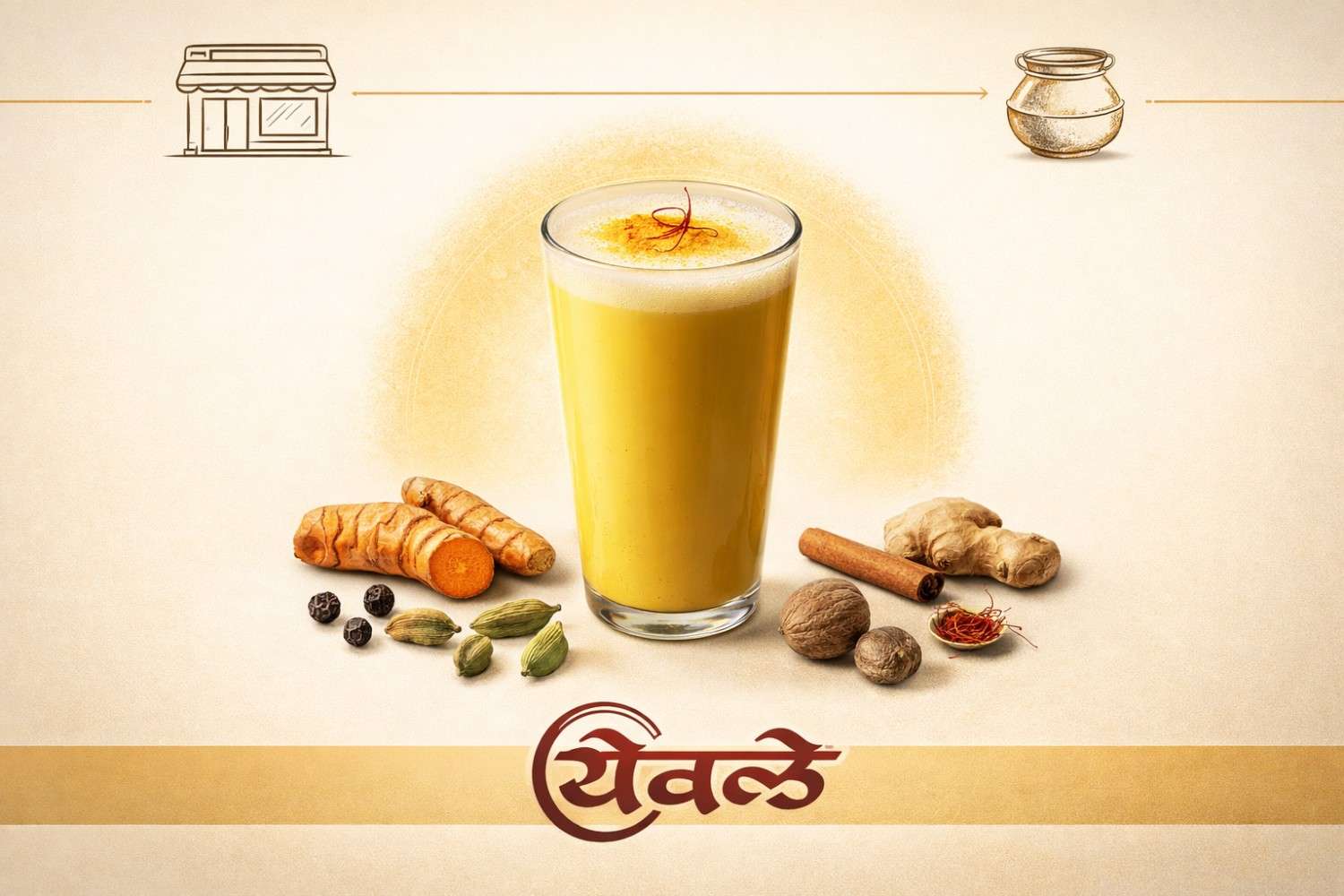
Holi wrapped up just two weeks ago, and Delhi is settling into that sweet spot between seasons. The winter jackets are packed away, but the brutal summer heat has not arrived yet. Evenings in mid-March are still pleasant, around 20 degrees, perfect for a stroll through Chandni Chowk after sunset. Near Paranthe Wali Gali, a man in a cotton kurta stands behind a small cart, stirring a tall steel pot over a blue gas flame. He drops in a pinch of turmeric. Then cardamom, crushed between his thumb and finger. A few threads of saffron. A crack of black pepper. The golden liquid steams gently into the spring evening, and four people wait quietly for their glass.
No signboard. No brand name. Just a recipe that his mother taught him, and her mother taught her.
Scenes like this play out across India every single day. From the gullies of Old Delhi to kitchens in Amritsar, Lucknow, Jaipur, and Pune, masala milk has been part of the Indian evening for as long as anyone can remember. Your family probably had its own version. Maybe your mother called it haldi doodh and made you drink it every time you caught a cold. Maybe your grandmother added extra saffron and told you it would make your skin glow. Maybe just a couple of weeks ago, during Holi, your family made thandai with the exact same masala-milk spice base that has been part of this tradition for centuries.
Now here is what is happening in 2026. That same drink sits on franchise menus across India. It trends under the name "golden milk latte" in London and New York. It has 50 million views on Instagram. And modern clinical research now confirms what Indian families always knew: this drink genuinely works.
So what exactly is masala milk? It is warm milk infused with a blend of traditional Indian spices, including turmeric, black pepper, cardamom, saffron, and cinnamon, rooted in centuries of Ayurvedic wisdom.
But here is the part that surprises most people. This humble kitchen drink is now driving real revenue for tea franchise outlets across India, from Delhi's busy Connaught Place to highway stops on the Jaipur expressway. Let us walk you through why.
What Is Masala Milk? It Is Not Just Haldi Doodh
Most people think masala milk is the same thing as turmeric milk. It is not. Turmeric milk (haldi doodh) is one version of masala milk, but the full recipe goes much further.
Traditional masala milk uses a combination of spices, each chosen for a specific reason. The base is always whole milk, heated slowly on a low flame. To that, families add turmeric for immunity, black pepper for absorption, cardamom for digestion, saffron for mood and vitality, cinnamon for blood sugar balance, ginger for circulation, and nutmeg for sleep. Some households in North India sweeten it with jaggery from Muzaffarnagar instead of sugar. Others add crushed almonds or pistachios for richness, a tradition especially strong in Delhi, Lucknow, and Rajasthan. The thandai that millions of Indians drank during Holi earlier this month? It shares the same spice DNA as masala milk, showing how deeply this tradition runs in Indian food culture.
Every Indian home has its own variation, passed down through generations. A family in Lajpat Nagar makes it differently from a family in Karol Bagh, and both would argue their version is the real one. That personal touch is what makes masala milk different from any packaged health drink on a shelf.
Here is the surprising truth about the Western "golden milk" trend: it is actually a simplified version of Indian masala doodh. The Western version typically uses just turmeric and one or two other spices in oat milk. The original Indian recipe has always been richer, uses full-fat cow or buffalo milk, and has a wider spice profile that makes it both more flavorful and more effective.
The Ancient Science Behind Every Sip: Ayurveda Meets Modern Research
This is where things get really interesting. Most wellness blogs will tell you masala milk is "good for you" and leave it at that. But the real story runs much deeper.
What Ayurveda Has Known for Centuries
In Ayurveda, milk is considered one of the most nourishing substances available. It enhances what practitioners call ojas, which translates roughly to vital energy or life force. But milk on its own can be heavy and hard to digest for many people.
That is exactly why Indian tradition adds warming spices to milk. The spices serve a dual purpose. They make the milk easier to digest, and they amplify its therapeutic properties. Turmeric is tridoshic, which means it balances all three body constitutions (Vata, Pitta, and Kapha). Cardamom cools the digestive system. Saffron enhances mood and complexion. Black pepper clears congestion and boosts immunity.
Cooking these spices in a small amount of ghee before adding them to milk is also a traditional Ayurvedic technique. It enhances the bioavailability of fat-soluble compounds. As it turns out, modern science agrees completely.
What Modern Science Now Confirms
Curcumin, the active compound in turmeric, is one of the most studied plant substances in the world. It has over 19,000 citations on PubMed and has been tested in more than 400 clinical trials for conditions ranging from inflammation to cognitive decline. Researchers have documented its anti-inflammatory, antioxidant, and neuroprotective properties across multiple peer-reviewed studies.
But here is the catch that most people do not know. Curcumin on its own has extremely poor bioavailability. Your body struggles to absorb it. When researchers gave 2 grams of isolated curcumin to healthy volunteers, serum levels were undetectable or very low.
The solution? Black pepper. According to Johns Hopkins Medicine, piperine (the active compound in black pepper) increases curcumin bioavailability by a staggering 2,000%. That is not a typo. Two thousand percent. Your grandmother was putting black pepper in your masala milk for a reason.
And it gets better. A 2024 clinical trial published in Food & Function (RSC) found that curcuminoids consumed in a dairy-based matrix showed 76% higher bioavailability and 105% higher peak concentration compared to capsule form. In plain English: drinking turmeric in milk works significantly better than swallowing a turmeric supplement pill. Science just validated what Indian kitchens figured out centuries ago.
What Each Spice Actually Does: A Breakdown Most Articles Skip
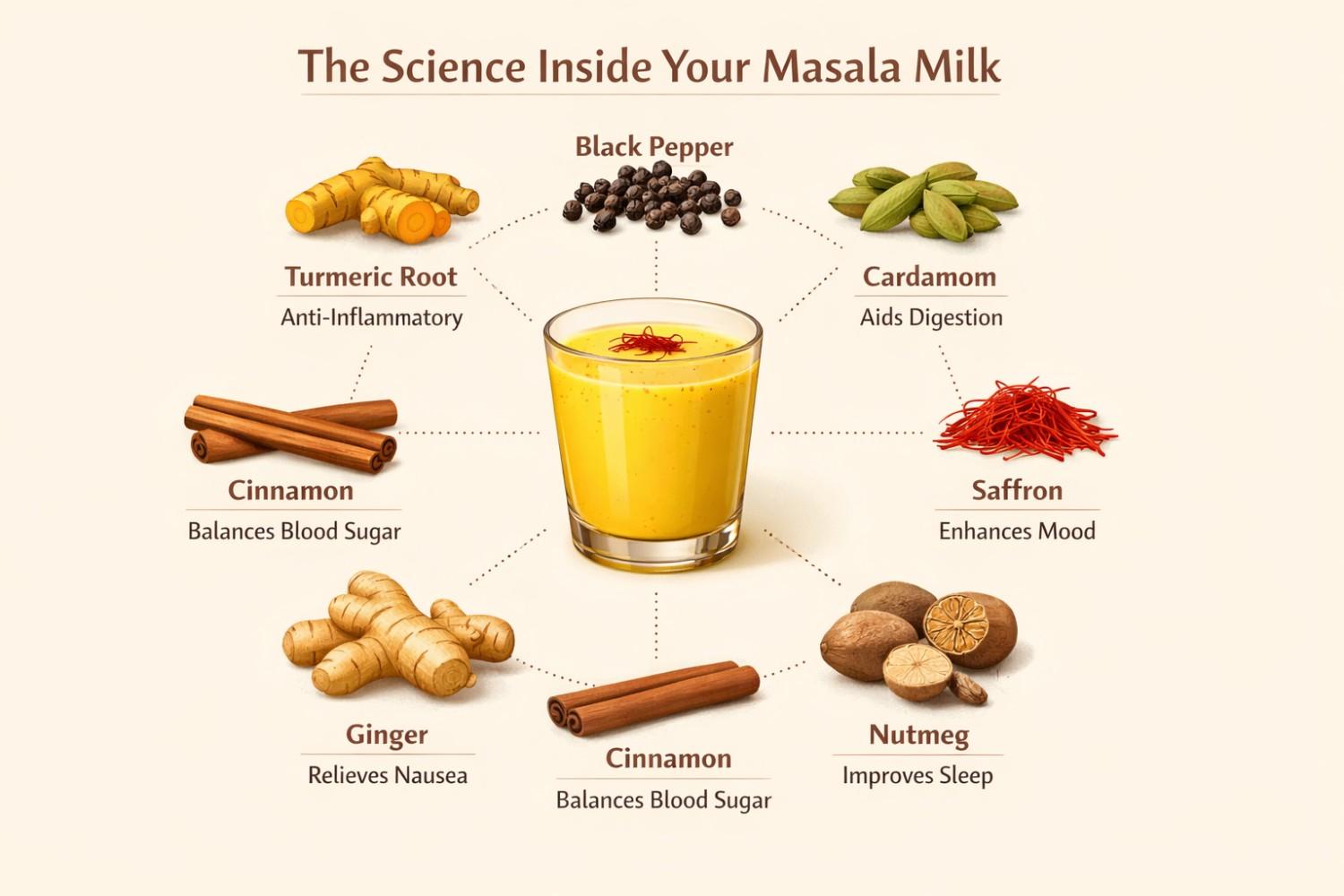
Most blogs list the spices and move on. Here is a detailed look at what each ingredient brings to the glass, backed by both traditional knowledge and current research.
| Spice | Traditional Benefits | What Research Shows |
| Turmeric | Anti-inflammatory, tridoshic, enhances digestive fire, promotes skin radiance | 400+ clinical trials. Curcumin supports immunity, reduces oxidative stress, protects cognitive function. |
| Black Pepper | Clears congestion, purifies, boosts immunity, balances Kapha | Piperine increases curcumin absorption by 2,000%. Stimulates digestive enzymes. |
| Cardamom | Tridoshic, cools the body, calms digestion, freshens breath | Demonstrated antioxidant activity. Supports healthy digestion and oral health. |
| Saffron | Enhances complexion, mood booster, supports vitality and reproductive health | Mood enhancement, hormonal balance, rich in antioxidants. Premium wellness ingredient. |
| Cinnamon | Warming, treats cough and cold, flushes toxins (ama) | Helps regulate blood sugar levels. Boosts metabolism and circulation. |
| Ginger | Promotes appetite, reduces body pain, aids digestion | Anti-nausea, anti-inflammatory, improves blood circulation. |
| Nutmeg | Natural sleep aid, reduces stress, balances Vata and Kapha | Promotes deep sleep, reduces anxiety, antimicrobial properties. |
What most people do not realize is that these spices are not random additions. Each one was chosen in the Ayurvedic tradition because it addresses a specific limitation of plain milk or amplifies a specific therapeutic benefit. Together, they create a compound effect that no single ingredient can achieve alone.
Why Masala Milk Is Trending Again in 2026
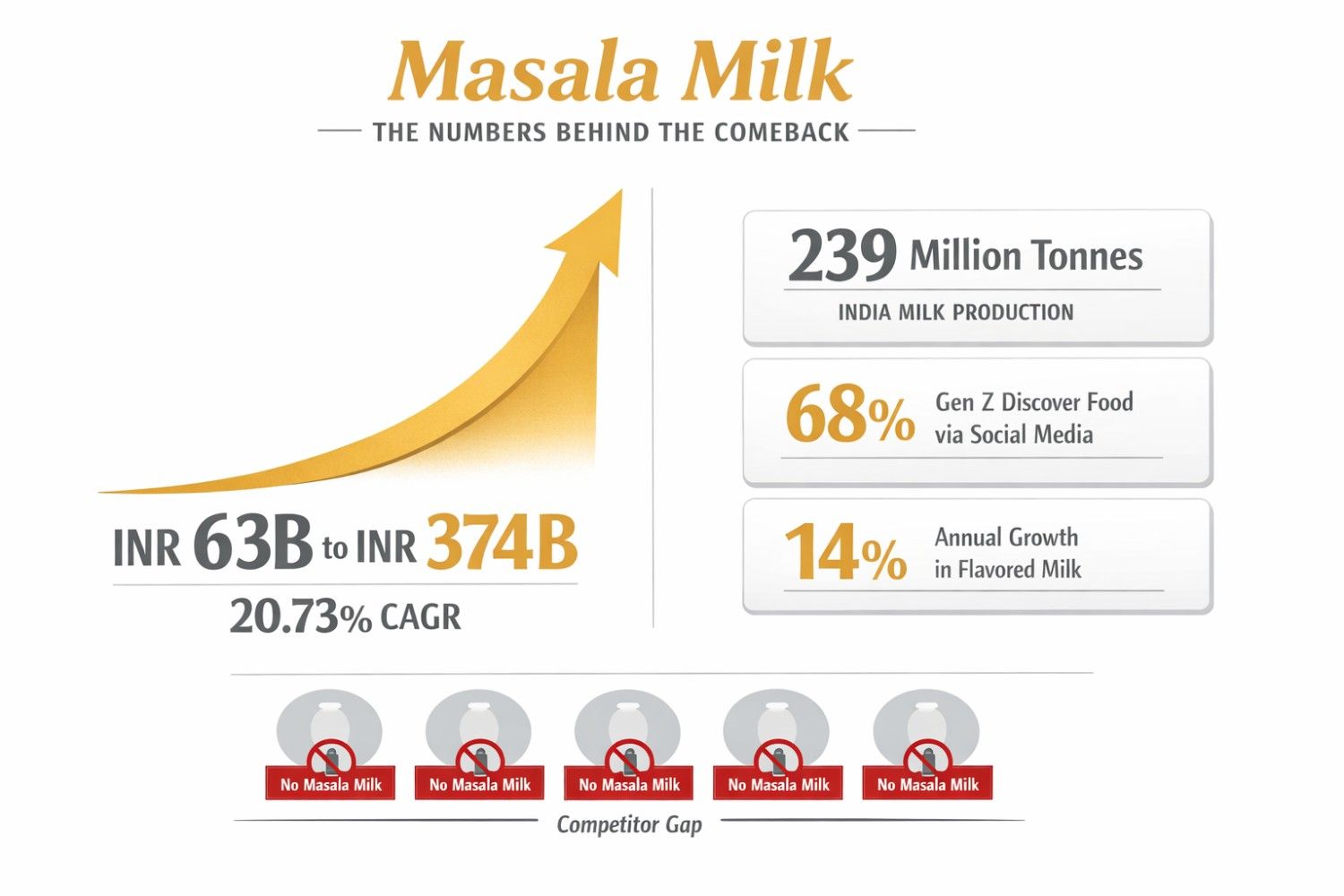
This is not just nostalgia. Real market forces are pushing masala milk back into the spotlight, especially in metro cities like Delhi, Mumbai, and Bangalore.
India's flavored milk market was valued at INR 63.30 billion in 2024 and is projected to reach INR 374.12 billion by 2033, growing at a CAGR of 20.73%, according to IMARC Group. Flavored milk overall is surging at 14% annually, driven by school nutrition programs and the sports nutrition boom.
Several things are fueling this growth right now:
• Post-pandemic wellness shift: Indian consumers, especially across Delhi-NCR and other metros, actively seek natural, preservative-free, immunity-boosting beverages. Masala milk checks every box.
• Major dairy brands entering the space: Nestle launched turmeric-infused A2 milk in 2025. Mother Dairy captured 18% of the drinkable-yogurt market in Delhi NCR with high-protein lassi within just nine months (Mordor Intelligence). Aavin introduced ashwagandha and herbal milk in August 2024. Keva Flavours released Thandai and Gulkand Paan flavored milk in September 2024, tapping directly into the same masala-milk tradition that peaks every year around Holi.
• The global golden milk trend: According to Food Business News, market researchers tagged Indian cuisine flavors as key food trends in 2024. Golden milk lattes are now a fixture on cafe menus across the US and Europe.
• Social media is accelerating everything: A 2024 study by IIM Bangalore found that 68% of Gen Z consumers discover new food outlets through social media, and 54% make purchase decisions within 24 hours of seeing a trending food video. In a city like Delhi, where food reels spread faster than anywhere else in India, masala milk's vibrant golden color makes it naturally shareable.
• Year-round relevance across seasons: Masala milk thrives during Delhi's cold season from November through February. But it does not stop there. Right now in mid-March, as spring settles in and the last thandai glasses from Holi dry up, masala milk naturally takes over as the lighter, everyday wellness drink for pleasant evenings. In a few weeks, when Delhi's summer heat arrives, a chilled saffron-cardamom milk variant works just as well. The Indian dairy market reached USD 135.30 billion in 2024 with North India leading in volume, according to Fortune Business Insights.
The bottom line is simple. Masala milk is not a seasonal fad. It is a traditional product meeting modern demand every month of the year, especially in a city like Delhi where food culture runs deep and trends spread fast.
Why Masala Milk Is a Smart Addition to Any Tea Franchise Menu
If you are exploring a tea franchise opportunity in India, or specifically looking at a tea franchise in Delhi, here is something worth paying close attention to.
Most tea franchise outlets sell chai, coffee, and maybe a cold beverage or two. Very few offer masala milk. That is a missed opportunity, and here is why.
It Captures the Customer Who Does Not Drink Tea
Not everyone who walks into a tea shop franchise wants tea. Think about the crowd at a busy outlet near Rajiv Chowk or Nehru Place in Delhi on a weekday afternoon. Some want something warm but caffeine-free. Parents order something nutritious for their children. Working professionals want a health drink in the middle of a long day. Elderly customers prefer Ayurvedic options. Fitness enthusiasts want anti-inflammatory drinks after a gym session. Masala milk serves all of these groups without cannibalizing tea sales.
It Opens Up Evening and Nighttime Revenue
Tea is primarily a morning and afternoon drink. After 7 PM, most people avoid caffeine. Delhi, however, is a city that stays awake late. Even now in March, with the weather turning warm and pleasant, the markets in Sarojini Nagar, Lajpat Nagar, and South Extension are buzzing well past 9 PM. Masala milk (especially the nutmeg variant) is traditionally a bedtime drink. A tea franchise in Delhi that serves masala milk can attract foot traffic during hours when regular chai sales naturally slow down.
If you are exploring this opportunity, learn how a tea franchise in Delhi works with 0% royalty and high returns, backed by a built-in customer base of 16 lakh+ loyal customers across India.
It Increases Average Order Value Without Extra Effort
When a customer adds masala milk to an existing tea-and-snack order, the average order value goes up significantly. This follows the same logic that makes snack items so profitable at franchise outlets. Menu diversification through beverages like masala milk and almond milk can contribute meaningfully to daily revenue, much like how complementary snacks have been shown to boost daily earnings at franchise counters.
It Gives You a Real Edge Over Competitors
Here is what the competitive landscape looks like right now for anyone evaluating a tea franchise in Delhi or anywhere else in India.
| Brand | Menu Focus | Masala Milk on Menu? | Delhi Presence |
| Chai Sutta Bar | Kulhad chai, cold coffee, mojitos, coolers | No | Multiple outlets |
| MBA Chai Wala | Tea varieties, limited food items | No | Limited outlets |
| Chaayos | Customizable chai, cafe-style experience | No (some milk options) | Strong presence |
| Chai Point | Office catering, tech-driven chai | No | IT park focused |
| Dolly Ki Tapri | Chai lounge, snack combos | No | Expanding |
Not a single major tea franchise brand actively promotes masala milk as a menu item. If you are evaluating a tea franchise under 8 lakh, the ability to offer a unique, high-margin product like masala milk, without needing a chef or special training, can set your outlet apart from hundreds of competitors in a crowded market like Delhi.
See how you can open a premium tea franchise starting at just ₹7.9 lakh with full setup support, training, and a chef-less model that keeps operations simple and profits high.
How to Enjoy Masala Milk: Tips From Indian Kitchens to Your Cup
Whether you order it at a franchise outlet near Connaught Place or make it at home in your Dwarka kitchen, here are a few tips to get the most out of your masala milk.
• Best time to drink: Morning for immunity and energy. Evening for relaxation. Bedtime for deep sleep (add a pinch of nutmeg). Right now in mid-March, the pleasant Delhi evenings make it an ideal time to build a daily masala milk habit before the summer heat kicks in.
• Always include black pepper: Without it, your body absorbs almost none of the curcumin from turmeric. Even a small pinch makes a 2,000% difference in absorption.
• Use whole milk or full-fat milk: Curcumin is fat-soluble. Skim milk will not deliver the same benefits. Delhi gets excellent full-fat milk from the Mother Dairy network, which works perfectly.
• Add jaggery instead of sugar: Jaggery adds iron and minerals while keeping the drink closer to its traditional roots. UP and Haryana produce some of the finest jaggery in India, readily available across Delhi.
• Pair it with a light snack: A cream roll, spongy cake, or bakarwadi pairs perfectly with masala milk, just like biscuits pair with tea.
• Adjust by season: Extra ginger during Delhi winters (November to February) for warmth. Right now in spring, keep the spice mix balanced with a saffron focus for its naturally cooling properties. Once the Delhi summer hits in April and May, try a chilled saffron-almond version. Nutmeg at bedtime works year-round for restful sleep.
The beauty of masala milk is its flexibility. It adapts to your body, your season, and your mood.
Want to see what else pairs well with masala milk? Browse the full menu of teas, milk-based drinks, and freshly prepared snacks available across 650+ outlets.
What Makes Franchise-Served Masala Milk Different From Homemade?
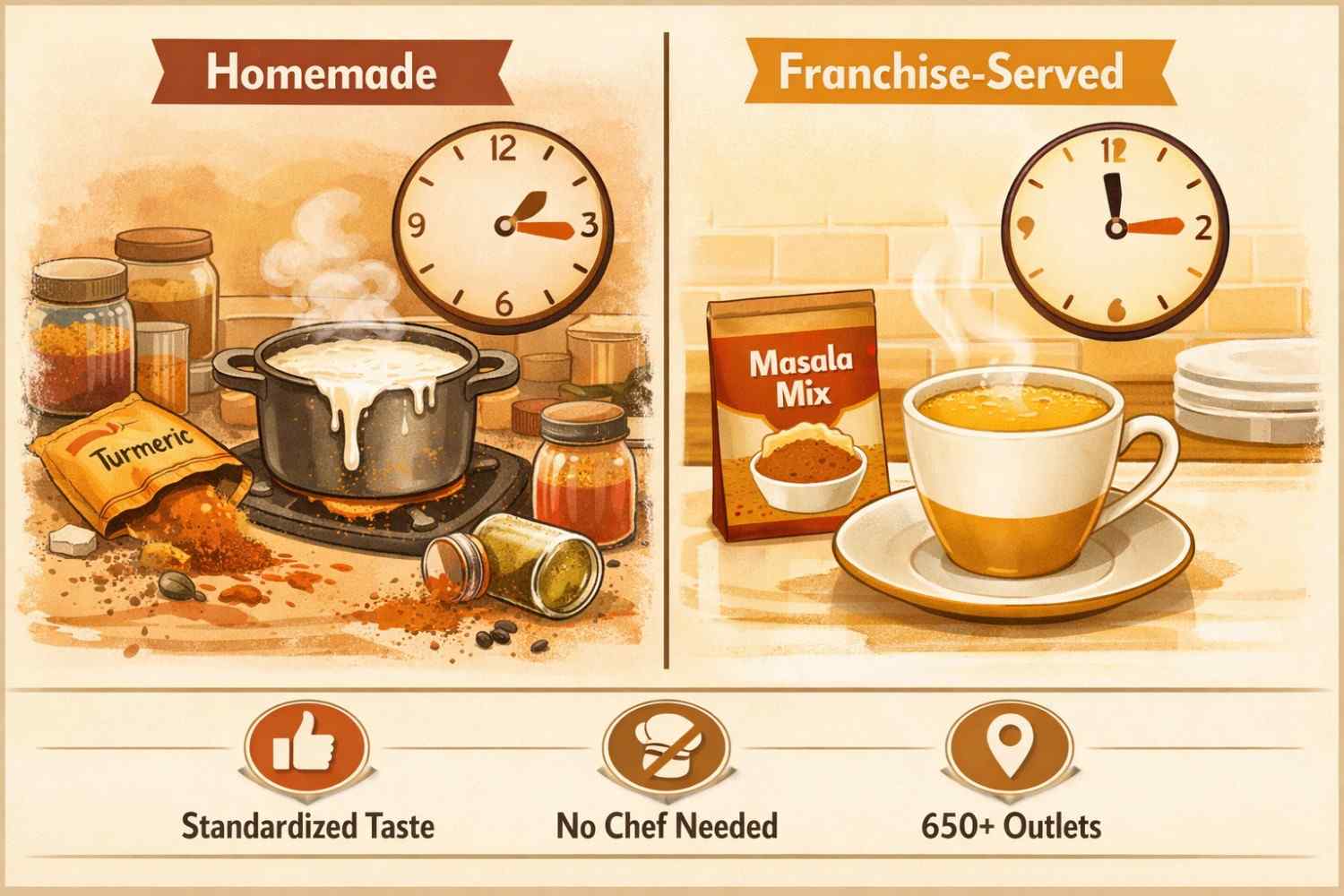
You might wonder: why order masala milk at a franchise outlet when you can make it at home?
Fair question. Here is the honest answer.
Making masala milk at home requires fresh whole spices, proper proportions, slow heating, and time. Most people skip one or more steps. They use pre-mixed turmeric powder without black pepper (which kills the bioavailability). They boil the milk too fast. They leave out saffron because it is expensive. The result tastes fine but misses the full benefit.
A well-run tea shop franchise solves this problem through standardization. At Yewale Amruttulya, for example, the masala spice blend is pre-prepared with the exact proportions needed for maximum flavor and benefit. The preparation process stays consistent every time across 650+ outlets. The milk quality is controlled. You get the full traditional recipe, made correctly, in under two minutes. That is the convenience factor that franchise models bring to traditional beverages.
For franchise operators, this is also the operational advantage. A chef-less model means any trained staff member can prepare masala milk to the exact same standard, whether the outlet is in Pune, Delhi, Indore, or Mumbai. No guesswork. No variation between locations. Just consistent quality at scale, which is exactly what customers expect from a branded experience.
The Grandmother's Recipe That Became a Franchise Product
Let us go back to where we started. That steel pot near Chandni Chowk. The turmeric dissolving into warm milk. The cardamom cracked open. The saffron turning everything gold. A handful of people on a pleasant March evening, waiting for a drink that their grandmothers used to make.
That recipe did not disappear when India modernized. It evolved. It moved from home kitchens to franchise counters. It traveled from Old Delhi's lanes to outlets in Connaught Place, South Extension, Noida, and beyond. It went from Pune to Indore to Mumbai. The Holi thandai you enjoyed just two weeks ago? Same spice family. Different format. Same tradition, alive and well.
The Indian dairy market reached USD 135.30 billion in 2024 and continues to grow. Flavored milk is one of the fastest-growing segments at 14% annually. And masala milk sits at the center of this growth because it combines something no factory product can replicate: tradition, taste, and science, all in a single glass.
If you are looking for a simple change in your daily routine, try masala milk the next time you visit a Yewale Amruttulya outlet near you. Ask for it with extra pepper and a touch of saffron. Your body will thank you.
If you are an entrepreneur, the brands that will win in the next five years are not the ones selling the same menu as everyone else. They are the ones that offer something meaningful, something rooted, something that makes a customer come back the next day. Masala milk is exactly that kind of product.
So here is the question worth asking: are you still ignoring the drink that India grew up on, or are you ready to serve it to the next generation?