Why This Question Matters in India
What is the Indian legend regarding the discovery of tea? People ask this because tea is not just something we drink. In India, tea is a daily ritual. It starts mornings, fuels workdays, and turns small conversations into longer ones.
But when something becomes part of everyday life, people naturally want to know where it began, not only in terms of dates and documents, but in the form of a story that feels memorable and meaningful.
That is where legends come in.
A legend is not the same as proven history. It is a traditional story that travels across generations, often carrying a message about discipline, belief, or culture. The Indian legend connected to tea is one of those powerful stories. It explains tea as something that was “found” because people needed alertness and focus, not because someone was trying to build a beverage business.
What Is the Indian Legend Regarding the Discovery of Tea?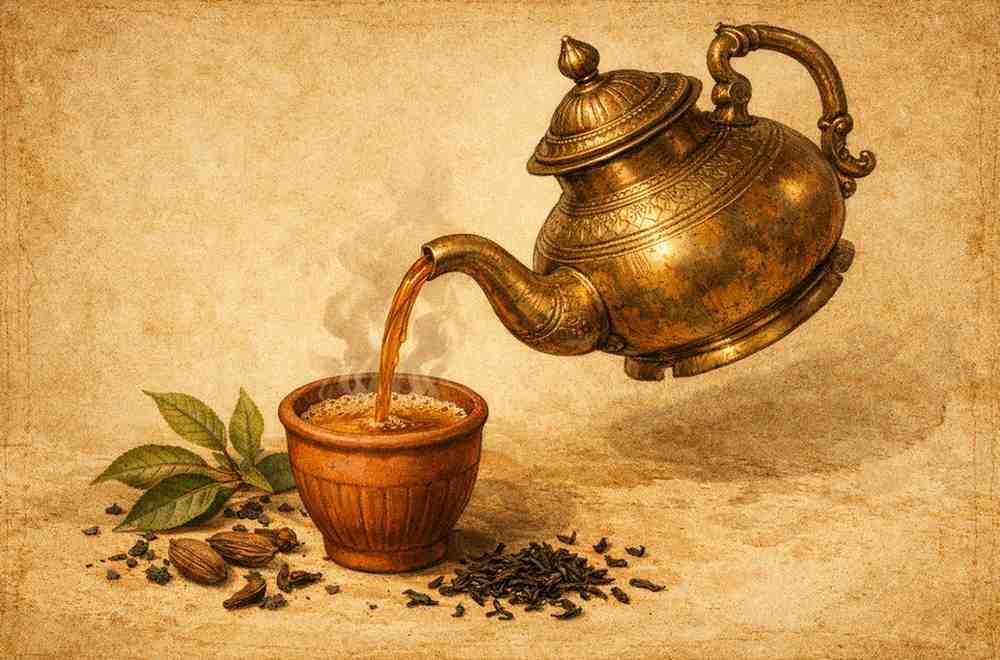
The most widely shared Indian-linked legend about tea begins with an Indian monk on a spiritual path. Different versions tell it slightly differently, but the heart of the story stays the same: tea was “found” because someone needed to stay awake.
The monk’s promise
The legend says the monk was deeply committed to meditation. Not the quick, calm kind people do today for ten minutes, but long, intense sessions where staying awake was a challenge.
He made a strict promise to himself:
He would not fall asleep during meditation.
The moment of failure
But during one long session, his body gave in. He fell asleep.
When he woke up, he felt he had broken his discipline. He was frustrated, disappointed, and determined not to let it happen again.
The extreme act
Here comes the dramatic part of the legend.
In anger and determination, the monk cut off his eyelids so he would never fall asleep again.
Yes, it is intense. But legends are often written in extreme moments to show extreme devotion.
The birth of the tea plant
The story then takes a magical turn.
Where the monk’s eyelids fell to the ground, a plant is said to have grown. This new plant had leaves with a unique power.
When these leaves were boiled in hot water and consumed, the drink helped people feel:
- more awake
- more alert
- more focused
That drink, according to the legend, became tea.
Why Indians connect with this story
This legend is popular in India because the central character is often described as an Indian monk, making it feel like an Indian-origin story, even though the tale is also found across parts of Asia.
In simple words, the legend answers the question like this:
Tea was discovered because a seeker needed wakefulness, and the leaves became a natural aid for focus.
What the Legend Really Means (And Why People Still Tell It)
Now that you know the story, the next question is: why did this legend become so famous?
Because even if we treat it as folklore, the message behind it is simple and relatable. Tea is not shown as a luxury drink in this legend. It is shown as a tool for alertness and discipline.
1) Tea as a symbol of wakefulness
The biggest theme is clear: staying awake.
Even today, this matches how people use tea in real life:
- students during exams
- night-shift workers
- drivers on long routes
- business teams between meetings
- homemakers who need a reset in the middle of the day
This is why the legend feels believable emotionally. Tea still plays the same role.
2) Tea as a symbol of self-control and commitment
The monk’s actions (even though extreme) represent something many people respect: commitment.
The story is basically saying:
When your goal is important, you train your mind and body to stay steady.
Tea becomes part of that “steady mind” routine. That is why in many cultures, tea is linked to:
- calm focus
- patience
- discipline
- routine
3) Why has the story survived for centuries
Legends survive when they are easy to remember and easy to repeat.
This one has everything that makes stories travel:
- a strong character (the monk)
- a problem (sleep)
- a dramatic turning point (the sacrifice)
- a reward (a plant that solves the problem)
Most importantly, it connects tea with a purpose, not just taste.
4) The emotional reason people love this legend
In India, tea is not only about caffeine. It is about how it makes you feel.
Tea is often the first thing people reach for when they need:
- comfort
- energy
- clarity
- a break from stress
- a reason to sit and talk
This legend gives a deeper meaning to that feeling. It tells people that tea was never just a drink. It was always something that helps humans stay present.
The Assam Belief: “Tea Was Already Here” (India’s Regional Narrative)

Along with the monk legend, India also has another powerful story around tea’s origin, especially in the North East.
This one is not a spiritual legend. It is more like a regional truth passed down through local memory.
The belief in Assam and the North East
Many people in Assam believe tea was not “discovered” in India by outsiders.
They believe tea plants were already growing naturally in the region, and local communities already knew how to use the leaves in their own way.
So when later records talk about tea being “found” in India, many locals feel the real story is:
Tea was always here. The world simply noticed it later.
How local communities are said to have used tea leaves
Traditional use was not always like the sweet milk chai we drink today. In many folk accounts, tea leaves were used in simple forms such as:
- Boiling the leaves to make a strong, bitter herbal drink
- using tea leaves in food preparations
- chewing leaves for a mild stimulating effect
The methods could vary by community, but the central idea stays the same:
The plant was familiar and useful long before it became a big industry.
Why this narrative matters
This belief is closely tied to identity and pride.
Assam is one of India’s most important tea regions today, and for people there, tea is not just business. It is heritage. So the “tea was already here” narrative becomes a way of saying:
This land did not just grow tea. It understood tea.
Legend vs Real History (A Simple Timeline That Makes Sense)
By now, you’ve seen two strong Indian narratives:
- The monk legend (tea discovered to stay awake)
- The Assam belief (tea was already known locally)
Now, let’s separate the story from the timeline in a way that stays easy to understand.
First, what legends are (and what they are not)
Legends are not written like news reports. They are created to explain “why” something matters, not “when” it happened.
So the monk story is best understood as a symbolic origin tale. It explains tea’s purpose: alertness, focus, discipline.
What history tells us in simple terms
1) Tea plants existed naturally in parts of Asia, including India’s North East
So tea did not appear because someone invented it. The plant was already part of nature in some regions.
2) People used tea leaves in different ways over time
Some communities used it locally (as Assam’s oral traditions suggest). In other places in Asia, tea became a brewed drink and slowly turned into a cultural habit.
3) Tea later became a large-scale product and industry in India
This is when tea moved from being a plant and a local drink into being cultivated, traded, and made widely available.
Why do people mix history and legend?
Because the question itself sounds like it has one single answer.
“What is the Indian legend regarding the discovery of tea?” is a story question.
But “how tea became popular and widespread” is a history question.
Both are useful, but they are not the same.
The easiest way to remember it
Here’s a clean way to hold both ideas in your mind:
- Legend explains the meaning (tea keeps you awake and focused)
- History explains the spread (tea plants existed, people used them, and tea later became a major part of Indian life)
How Tea Became Indian Chai (Milk, Spices, and the Culture We Know Today)

Even if the legend explains tea’s “discovery,” the real magic is what India did next.
India did not keep tea as a plain leaf drink. India turned it into chai, and chai became a daily habit across every age group, city, and workplace.
1) India made tea warmer and more filling
In many homes and tea stalls, tea is not served as just hot water with leaves. It is made with milk.
Milk made tea:
- smoother and richer
- more satisfying
- easier on the stomach for many people
- more like a comfort drink than a light beverage
2) The spice element made chai uniquely Indian
Spices gave chai a strong identity. Not every cup uses all spices, but the idea of masala chai became part of Indian taste.
Common spices include:
- ginger for warmth
- cardamom for fragrance
- cloves for a strong kick
- black pepper for heat
- cinnamon for sweetness and aroma
3) Chai became a social language
In India, chai is often an excuse to connect.
Chai became a soft way to say:
- let’s talk
- let’s pause
- let’s reset
- let’s share a moment
4) The tea stall changed everything
The chai tapri made tea affordable, fast, and available everywhere.
That is why chai became part of:
- office routines
- college canteens
- market shopping breaks
- long drives and highway stops
- early morning walks and evening catch-ups
5) How does this connect back to the legend
The legend says tea was discovered to help someone stay awake and focused.
Modern chai does the same, but with an extra Indian layer:
- alertness from tea leaves
- comfort from milk
- warmth from spices
- connection through conversation
FAQs (Quick Answers)
What is the Indian legend regarding the discovery of tea?
The most popular Indian-linked legend says an Indian monk struggled to stay awake during long meditation. After falling asleep, he made an extreme sacrifice, and from that act a plant grew. When its leaves were brewed, the drink helped people stay alert. That plant was believed to be tea.
Is the Indian tea discovery legend true?
It is considered a legend, not proven history. People share it because it symbolises focus, discipline, and wakefulness, which still matches how tea is used in daily life.
Why is the tea discovery legend connected to India?
Because the central character in many versions is described as an Indian monk, it is often discussed as an Indian legend regarding tea’s discovery, even though similar versions are also told across parts of Asia.
What is the Assam story about tea’s origin?
Many people in Assam believe tea plants were already growing naturally in the region, and local communities already used tea leaves in simple forms. So the belief is that tea was not “discovered” in India later; it was already known locally.
How did tea become chai in India?
India adapted tea by adding milk, spices, and sweetness. Over time, chai stalls and home-style brewing made it a comfort drink and a social habit across the country.