Picture this. It is 8 in the morning in Pune. Rohan, a 22-year-old engineering student, runs out of his hostel with five minutes to spare before class. He spots a Yewale Amruttulya outlet at the corner. He has just enough cash for one cup of tea. He plans to spend ₹10. That is it.
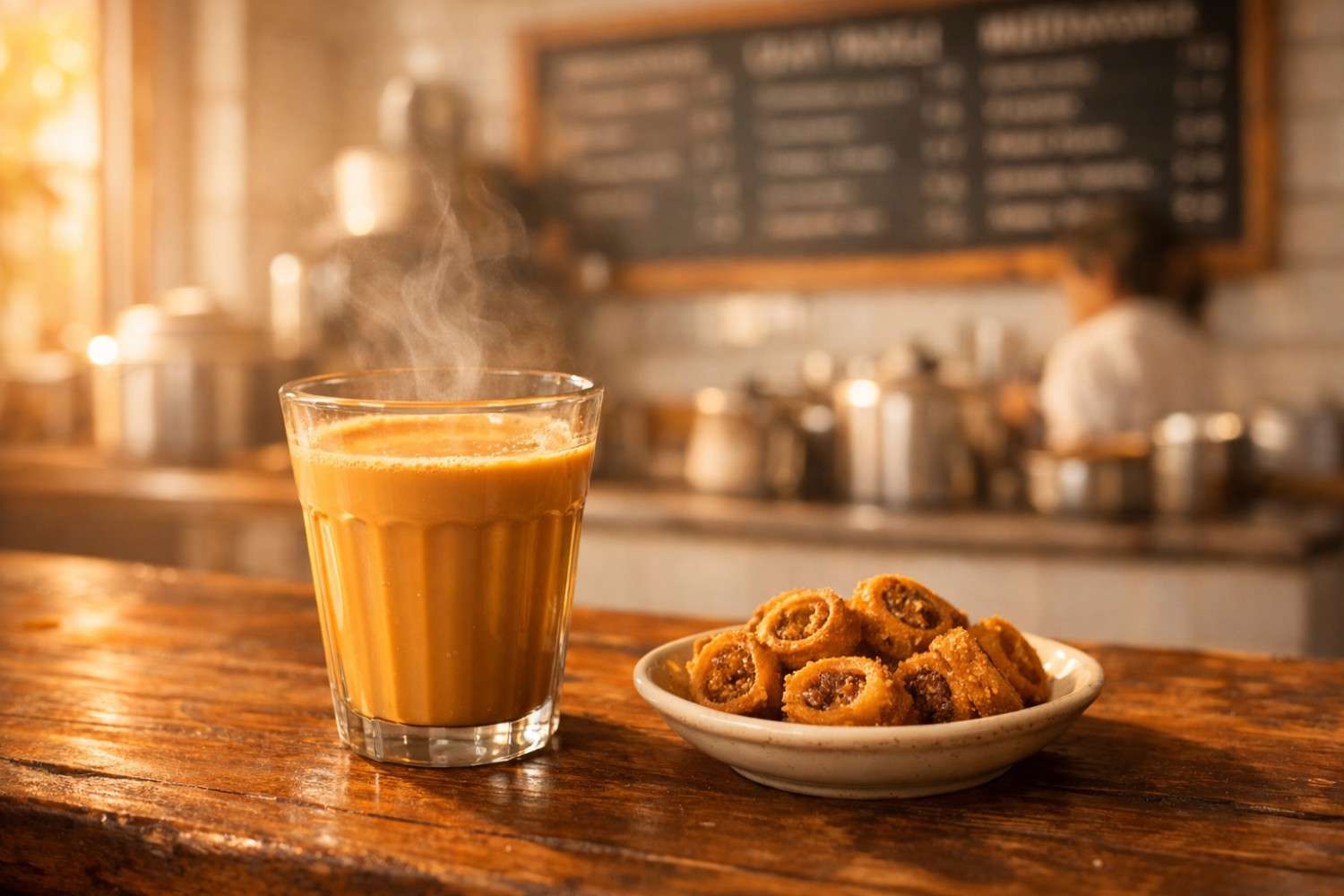
But then he sees the Jaggery Tea on the board. He has never tried it. Just ₹12. A small difference. He switches. Then the person behind the counter asks, 'Bakarwadi bhi loge? Chai ke saath bahut achi lagti hai.' Rohan glances at the fresh Bakarwadi on the counter. It smells incredible. He says yes. That is ₹20 more.
He walks out six minutes later, ₹32 lighter, completely satisfied, and not at all bothered about the money. He came in for a ₹10 chai and left with a ₹32 experience. And he did not feel upsold. He felt taken care of. That is the difference between a chai shop and a system.
That small moment plays out thousands of times a day across our 650+ outlets. And it is not accidental. It is the result of 40 years of figuring out what people really want when they walk through our door.
At Yewale Amruttulya, our menu of 30+ products is not just a list of what we sell. It is our most powerful business tool. Every item on that board earns its place. And the result is a 40% higher average order value (AOV) compared to outlets that sell only chai. Here is how we built it and what it means if you are thinking about owning a tea shop franchise.
Why Most Chai Shops Stay Small (And Why We Don't)
Here is a truth most people in the tea business learn too late: selling only chai is a ceiling, not a business model.
Think about your local tapri. The chai is great. The owner is there from 6 AM to 10 PM. He serves hundreds of people a day. But his average order is ₹10. Maybe ₹15 on a good day. He works long hours and earns just enough to get by. He has no room to grow because he has no product to grow with.
That is the single-product trap. And it is where most unorganized chai shops get stuck.
What Most People Don't Realize About Menu Size
There is a common assumption that more products mean more complexity. And if you are running a fine-dining restaurant, that is true. But a tea franchise works differently. The sweet spot is not 5 items and not 80 items. It is around 30 to 40 thoughtfully chosen products that work together.
For context, Chaayos offers over 80,000 possible chai combinations (Source: Chaayos brand positioning). That sounds incredible. But here is what happens with that many options: customers freeze. They spend 4 minutes reading the menu and still order something safe. That is called decision fatigue, and it kills impulse purchases.
Our menu at Yewale Amruttulya is designed to avoid that entirely. Thirty-plus products, clearly grouped, each one familiar enough to feel comfortable and interesting enough to trigger curiosity. That balance is what drives higher order values.
The 5 Revenue Layers Inside Our Menu
Our menu is not random. Every product fits into one of five layers, and each layer plays a specific role in how much a customer spends. This is something almost no one writes about when they talk about chai franchise models.
Layer 1: The Entry Products (The Door Openers)
These are the products that get people in the door. Regular Milk Tea, Black Tea, Ginger Tea, and Lemon Tea. Priced in the ₹10 to ₹15 range, they are the reason someone chooses us over a tapri. The price point is identical to unorganized chai shops. But we offer brand trust, hygiene, and consistency that a tapri never can.
The goal of Layer 1 is not to make money. It is to make the first sale and start the relationship.
Layer 2: The Curiosity Products (The Upgrade Triggers)
Jaggery Tea, Masala Chai, Sugar-Free Tea. These are familiar but slightly different. They are positioned just above the base price (₹12 to ₹18), and they work because they answer a question the customer is already thinking: 'Is there something a little different I could try today?' They are easy upgrades that raise the ticket value without requiring much convincing.
Layer 3: The Premium Beverages (The Surprise Winners)
Hot Coffee, Cold Coffee, Masala Milk, Rose Milkshake. These are priced higher and they signal that we are not just a chai shop. A customer who came in for chai may leave with a Cold Coffee on a summer afternoon. This layer consistently performs during April through July and during festive months.
Layer 4: The Cold Beverages (The Seasonal AOV Boosters)
Cold Tea, Lemonade, flavored cold drinks. During Indian summers, hot tea traffic drops. Without cold beverages, a chai outlet loses a significant chunk of afternoon revenue. Our cold range keeps the register moving even when the heat drives people away from hot drinks. Most standalone chai shops have no answer for summer afternoons. We do.
Layer 5: The Food Items (The Real AOV Multipliers)
Bakarwadi, Spongy Cake, Cream Roll, Jaggery Cream Roll, Cookies. This is the layer most chai businesses completely ignore, and it is the biggest mistake they make.
According to Chai Point's F&B data, food items account for 25 to 30% of total revenue in successful tea-focused QSRs. A customer who orders chai and a Bakarwadi has increased their spend by 100 to 200% with a single add-on. That one decision by that one customer is the difference between a ₹12 order and a ₹32 order.
Here's the surprising truth about our food items: None of them require a chef. Every snack we serve is supplied by our central HQ and is ready to serve. A franchise owner does not need a cook. They do not need a kitchen. They just need a counter and a trained staff member. This is the part of our tea shop franchise model that almost no one talks about publicly. |
The Science of the Snack-Chai Pairing (This Is Where the 40% Comes From)
Indians do not just drink chai. They eat with chai. This is a cultural behavior that has been around for generations. Biscuits. Namkeen. Sev. Chakli. Something crunchy, something warm, something that pairs with the cup in hand.
Here is what most tea franchise models miss: that behavior is a built-in upsell. The customer is already looking for a snack. You just need to make it visible, make it accessible, and make it feel natural to ask for.
We train our staff to do exactly that. It is not high-pressure selling. It is simply making the suggestion at the right moment. 'Chai ke saath Bakarwadi loge?' That one question, asked to 3 out of every 10 customers, is responsible for a meaningful share of our 40% AOV advantage.
The Math That Every Franchise Owner Needs to See
| Scenario | Customers/Day | Avg Order | Daily Revenue | Monthly Revenue |
| Chai only (tapri model) | 200 | ₹10 | ₹2,000 | ₹60,000 |
| Chai + limited menu (3 items) | 200 | ₹18 | ₹3,600 | ₹1,08,000 |
| Yewale model (30+ products + snacks) | 200 | ₹32–₹45 | ₹6,400–₹9,000 | ₹1,92,000–₹2,70,000 |
*These figures are illustrative estimates based on typical outlet performance and industry benchmarks.
The gap between the first row and the third row is not just about selling more products. It is about having a menu that is designed to grow revenue without adding complexity for the staff or the customer.
How We Compare to Other Tea Brands (An Honest Look)
We do not shy away from comparisons. Here is an objective look at how different players in the tea space approach the menu and AOV question.
| Brand | Price Range | Avg Order Value | Menu Size | Snack Pairing | Chef Needed? |
| Yewale Amruttulya | ₹10–₹20 (beverages) | ₹32–₹80 | 30+ products | Yes, centrally supplied | No |
| Chaayos | ₹80–₹200 | ₹150–₹300 | 80,000+ combinations | Yes, full kitchen menu | Yes |
| Chai Point | ₹30–₹80 | ~₹75 (vending avg) | 15–20 SKUs | Limited | No (vending) |
| Local Tapri | ₹5–₹15 | ₹5–₹15 | 1–3 items | None | No |
What this table shows is that we occupy a unique position in the market. We are as affordable as a tapri but we have the menu depth and brand system of an organized chain. Chaayos and Chai Point serve a different segment entirely, one that is more urban, more premium, and less accessible to the everyday Indian chai drinker.
A ₹200 chai is not competition for a ₹12 Jaggery Tea. They are completely different products for completely different moments in someone's day. Our customer is the student before college, the auto driver in the afternoon, the office worker during a 3 PM break. Those moments happen 3 to 5 times a day for most Indians.
What most websites overlook when comparing chai brands: Chaayos and Chai Point compete on premiumization. Yewale Amruttulya competes on frequency. A customer visits a premium chai cafe once a week. They visit Yewale 3 to 4 times a week. Volume of visits multiplied by a strong AOV is what makes a tea franchise truly profitable at scale. |
Three Things About Our Menu That No One Else Talks About
1. The Anti-Acidity Process Drives Repeat Visits
We make our tea differently from most outlets. The milk is boiled, cooled to a specific temperature, and then used in the tea-making process. This is not a marketing claim. It is a genuine preparation method that reduces acidity in the final cup. We use our own proprietary tea powder, prepared at our central facility, specifically formulated for this process.
Customers do not always know why our chai feels different on the stomach. They just know it does. And they come back. A menu can be great, but if the core product builds loyalty at a physical level, that is a competitive advantage that is almost impossible to copy.
2. Standardized Supply Is Our Real Menu Engine
Here is something that franchise models rarely explain clearly: we do not earn royalties from our franchise owners. Our revenue comes from supplying the raw materials, including our proprietary tea powder and pre-made food items, to each outlet.
This structure is important for franchise owners to understand because it means our financial incentive is aligned with yours. If you succeed, we supply more. We have no reason to inflate royalties or create hidden costs. The menu complexity is managed by us centrally, and you benefit from it at the outlet level without carrying the operational burden of managing multiple suppliers or recipes.
3. Price Standardization Makes the Menu Your Only Revenue Lever
Franchise owners cannot raise the price of chai. Standardization is part of what makes the brand trustworthy. If every outlet charges a different price, the brand promise breaks down.
But this means that the only way to grow revenue as a franchise owner is to grow the average order size. And the only way to do that is through the menu. This is why the 30+ product range is not a nice-to-have. It is the single most important business tool a Yewale franchise owner has.
How Each Season Has Its Own AOV Driver
One of the smartest things about our menu is that it has been built to work all year round. Most standalone chai shops peak in winter and slow down in summer. Our seasonal product mix is designed to prevent that revenue dip.
| Season | Top Products | Revenue Driver | Customer Behavior |
| Summer (Apr–Jul) | Cold Tea, Cold Coffee, Lemonade, Rose Milkshake | Cold beverage revenue replaces hot chai volume | Seeks refreshment, visits in evenings |
| Monsoon (Jul–Sep) | Masala Chai, Ginger Tea, Bakarwadi combos | Snack pairing peaks, comfort-driven orders | Visits more frequently, spends more per visit |
| Winter (Nov–Feb) | Jaggery Tea, Masala Milk, Ginger Tea | Premium variant chai drives higher per-cup revenue | Orders larger sizes, more add-ons |
| Year Round | Regular Tea, Black Tea, Spongy Cake | Consistent base revenue anchor | Daily habit visitors, high frequency |
Seasonal items do not require new equipment. The same setup that serves hot chai also serves cold beverages. This means the capital investment stays fixed while revenue potential fluctuates upward with the right products for each season.
What This Means If You Are Considering a Tea Franchise
If you are thinking about getting into the tea business, here is what you really need to understand. A tea shop franchise is not just about location and footfall. Those things matter, yes. But what separates a ₹60,000 per month outlet from a ₹2,00,000 per month outlet is almost entirely the menu.
Here is what the right menu system gives you:
• Multiple upsell moments in every single transaction, without requiring pressure selling
• Seasonal revenue protection that keeps orders coming in across all 12 months
• Pre-supplied food products that remove the kitchen complexity from your operation
• A standardized system that lets your staff drive sales without specialized training
• Zero royalty structure, which means every extra rupee your customers spend stays with you
The number India's tea industry is projected to reach Rs. 56,780 crores by 2030 (Source: IMARC Group). The market is growing. The customers are there. What separates the businesses that grow with the market from those that stay small is exactly this: a well-designed menu that gives customers more reasons to spend.
The Last Sip: Bringing It All Back to Rohan
Remember Rohan from the beginning of this post? He came in for ₹10 and left having spent ₹32. He was not tricked. He was not pressured. He was simply met with the right options at the right moment, served by a system that was designed to give him more of what he already wanted.
That is the Yewale philosophy. We do not raise prices to grow revenue. We build menus that give customers more ways to say yes. And when customers say yes more often, franchise owners build more sustainable, more profitable businesses.
Forty years of running chai outlets across Pune and then across India has taught us one thing above all else: the cup of chai is the beginning of the relationship, not the end of it. The menu is what keeps it going.
If you are exploring a chai franchise opportunity that comes with a proven menu system built to grow your average order value, we would love to talk. Visit Yewale Amruttulya to explore franchise opportunities and see how our 40-year-old menu system can work for you.
Key Takeaways A 30+ product menu is a business system, not just a product list. It is designed to grow per-customer revenue without raising prices. The snack-chai pairing is the biggest single driver of AOV improvement, contributing to 25 to 30% of total revenue in successful tea QSRs. Seasonal product rotation protects revenue across all 12 months, which single-product chai shops cannot replicate. The no-chef, centrally-supplied food model makes a complex menu operationally simple for franchise owners. A zero-royalty structure means every improvement in AOV goes directly into the franchise owner's pocket. |
What's stopping you from turning a ₹10 chai into a ₹60 customer experience? Drop your thoughts below or reach out to us directly.